
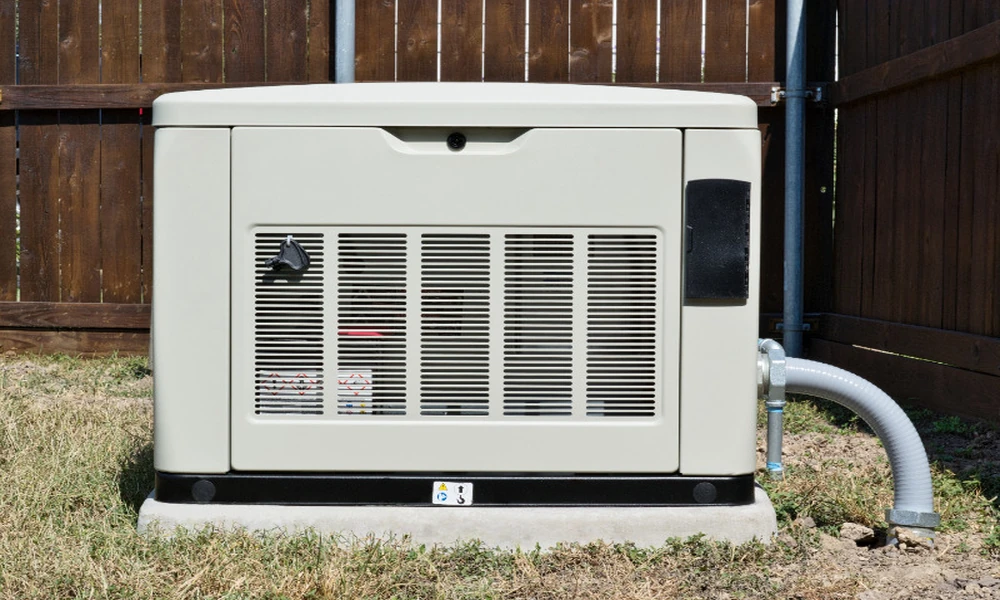
Twenty years. That’s what a properly installed air-cooled standby unit can realistically give you, and it’s roughly double what most homeowners actually get. The gap has almost nothing to do with the brand on the enclosure and almost everything to do with four decisions made in the first three years of ownership.
I’ve watched units in coastal Florida die at year eight with clean paint and a corroded controller, and I’ve watched a fifteen-year-old unit in a dusty inland lot fire on the first crank every time. The difference is never luck. If you’re weighing a purchase right now, it helps to know up front how long do generac generators last and what moves that number in either direction. Here’s the honest version, plus the maintenance model I’d use on my own house.
What Actually Kills a Generator Early
Engines are tough. Controls and connections are not. In my experience the failure order goes like this: battery, controller board, transfer switch contacts, then everything else. The mechanical parts usually outlive the electronics by a decade.
Run hours matter far less than people assume. A unit that exercises for twelve minutes a week and runs a handful of multi-day outages per year accumulates maybe sixty hours annually. That’s nothing for an engine designed to run continuously. What it can’t tolerate is sitting in salt air with a battery that’s quietly sulfating, or running on oil that’s two seasons past due because the last outage “went fine.”
Load matters too. Sizing a unit so it runs near capacity through every outage is the mechanical equivalent of driving with the pedal down. Some headroom, say running at half to two-thirds of rated output during typical outages, buys you years.
The Four-Clock Maintenance Model
Most people treat maintenance as one annual appointment. That’s the wrong mental model, and it’s why so many units fail between visits. I think about a generator on four separate clocks, each ticking at a different speed.
Clock one: the weekly exercise. This isn’t maintenance, it’s a heartbeat check. Your unit should start, run, and shut down cleanly every seven days. If it stumbles once, note it. Stumble twice and call someone. A generator that fails its exercise has told you exactly what it will do during a hurricane, and the message is not subtle.
Clock two: the annual service. Oil, filter, plugs at manufacturer intervals, valve clearance checks where specified, and a load test that actually pushes the unit rather than letting it idle. Skip the load test and you’re servicing a machine you’ve never verified under pressure.
Clock three: the three-to-five year hardware review. Battery replacement on a schedule, not on failure. Belt inspection. Transfer switch torque check. This is the clock most homeowners never start, and it’s the one that decides whether you hit year fifteen or replace a controller board in year nine.
Clock four: the environmental cycle. This one runs on seasons, not hours. Salt air, humidity, pollen, and dust all attack the enclosure and the electronics inside it. A coastal install needs a corrosion and intrusion review every year or two. An inland install with heavy spring pollen needs air intake attention on the same rhythm. Same machine, different enemies, different checklist.
Does Fuel Type Change the Lifespan?
Yes, mostly through how cleanly the unit runs and how well the fuel stores. Natural gas is the low-drama option because the fuel never degrades and there’s no tank to manage. Liquid propane behaves similarly in a properly sized tank. Diesel brings longer service intervals and better efficiency but demands fuel polishing and tank discipline, which is exactly where neglected diesel units fall apart.
If you have gas service at the meter, I’d take natural gas every time. The reliability win comes from removing a whole failure category, not from the engine itself. For anyone curious about how fuel choice and storage interact, the Department of Energy keeps plain-language material on home energy systems worth a read before you commit.
A Coastal Case Worth Copying
Picture a homeowner three miles from the water in Sarasota County. Unit installed in year one with a proper concrete pad, elevated a few inches above grade, intake facing away from prevailing salt wind. Years one through five, standard annual service, zero drama. Year six, the exercise starts taking two attempts in humid months. Year seven, the controller throws intermittent faults and the battery reads healthy, which confuses everyone.
The fix wasn’t the engine. It was corrosion on the control wiring harness and a battery that had sulfated invisibly in the heat. Total repair cost: a few hundred dollars, caught because someone was actually watching the exercise behavior instead of assuming a green light meant health.
Contrast that with the unit two streets over, serviced faithfully once a year but never opened up between visits. That one lasted nine years before a transfer switch failure pushed a full replacement. Same model, same climate, same service contract. The difference was whether anyone treated the weekly run as data.
Electronics and power switching in residential equipment follow predictable stress and failure patterns, which is why the IEEE publishes so much on reliability engineering. The principles apply to your generator exactly as they apply to a data center.
Your Pre-Purchase Checklist
- Confirm the install includes a load calculation, not a guess based on square footage.
- Ask where the unit will sit relative to prevailing weather and water.
- Get the exercise schedule in writing and learn what “normal” sounds like.
- Budget the battery proactively, roughly every four to five years in hot climates.
- Verify the transfer switch brand and serviceability before signing.
Emissions rules also shape modern residential units, since cleaner combustion generally means less carbon fouling and longer oil life. The EPA maintains the standards if you want to understand what your unit was built to meet.
The Short Version
Twenty years is a realistic ceiling, not a fantasy, and the path there is boring. Watch the weekly exercise with actual attention. Service annually with a real load test. Replace the battery before it fails. Know which environmental clock your install is running on and put it on the calendar.
You don’t need a bigger generator. You need a shorter leash on the four things that quietly decide its fate. When was the last time you listened to your unit run and could honestly say it sounded right?

Comments are closed.